


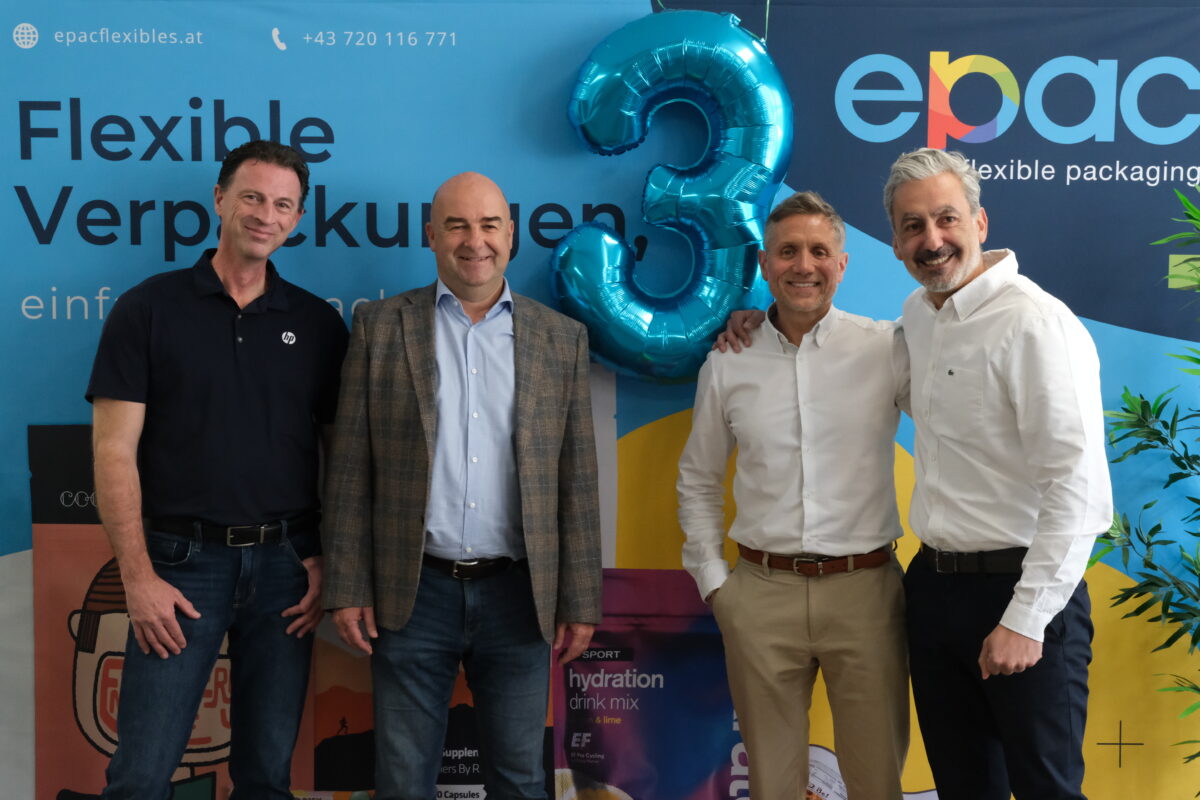
Three years after production began in Zams near Innsbruck, ePac’s Austrian facility represents more than just a regional success story. Shared expertise, standardized quality requirements, and close collaboration between locations ensure consistent customer service across the entire network. To mark this anniversary and the recent installation of the HP Indigo 200K, we spoke with ePac Europe’s management about how consistently the company implements its business model.
How can flexible packaging be produced in small and medium runs on an industrial scale, cost-effectively, and with short lead times? ePac doesn’t answer this question with a single machine. The company integrates market analysis, business models, processes, technology, and employees into a single system. What sounds like simplification is actually the result of years of experience and a clear market focus. ePac combines digital printing, flexible manufacturing, and optimized processes to enable fast turnaround times for brands of all sizes.
Maria Lyri, Marketing Manager at ePac Europe, sums up what the company stands for in a single sentence: “Flexible packaging made easy.” The phrase sounds simple, but the operational reality behind it is a challenge. Flexible packaging is technically complex. Materials, barriers, sealing properties, opening behavior, reclosability, stability, heat resistance, and lamination must all be coordinated. ePac does not try to downplay this complexity. However, thanks to a rigorous business model, the company overcomes these challenges and thereby significantly reduces them for its customers.
Johnny Hobeika, CEO of ePac Europe, sums it up: “Our product isn’t innovative. Our method of manufacturing it is.” The product itself is well known. The difference lies in the way ePac manufactures, sells, and delivers these products on an industrial scale.
A clearly defined market
ePac was born out of a clear market analysis. Small and medium-sized brand manufacturers needed flexible packaging in smaller quantities, often with multiple items, short lead times, and without large inventories. For a long time, the flexible packaging industry had been geared toward large customers, high minimum order quantities, and long production runs. The founders of ePac recognized a clear gap in the market: an increasing number of product variants, shorter lead times, low minimum order quantities, and no signs that this trend would slow down. At the same time, turnaround times in the conventional market ranged from six to eight weeks or more. Focusing on this market segment is one of the core elements of the strategy. At first glance, this may seem limiting. In practice, however, it ensures speed, predictability, and repeatability.
Delivery Time Is Our Top Priority
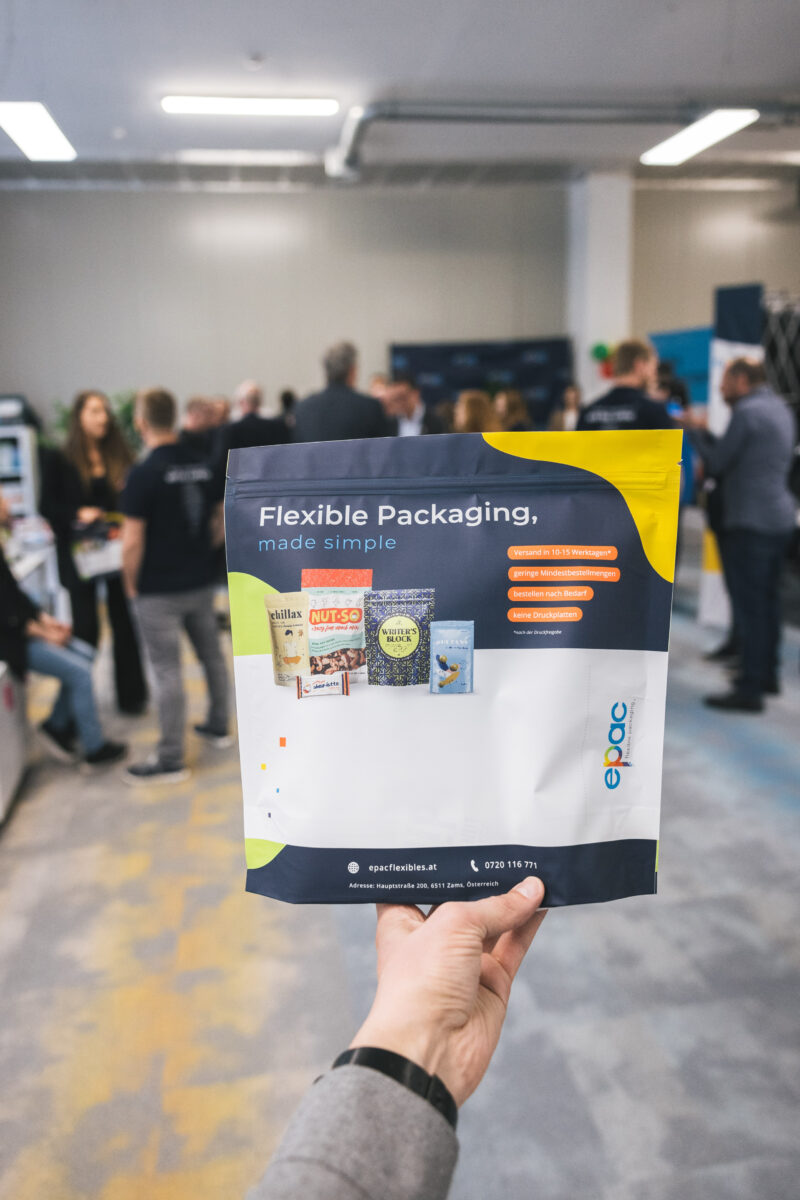
The core service promise is: 10 to 15 business days for delivery. This timeframe defines the entire business model. John Peat, Group Vice President of Operations at ePac, says: “One of the main reasons customers come to us is for a small order with many SKUs, but with a lead time of 10 to 15 days.”
Fast turnaround times are therefore a central component of ePac’s customer offering. This applies to order selection, pricing, product range, material approvals, machine platforms, post-processing, service, and staff development. For smaller brands, this is generally straightforward, as the benefits are immediately apparent. They avoid high minimum order quantities, reduce start-up costs, and bring a product to market faster. For larger brands, the benefits are different. They can use this approach to implement promotional campaigns, design changes, product line tests, or regional variants more quickly.
Peat says, “We’re eliminating obsolescence.” Digitally produced flexible packaging can help brands reduce inventory risk, respond more quickly to market changes, and roll out product variants more efficiently.
Standardization Drives Speed
In many companies, flexibility is viewed as the opposite of standardization. At ePac, flexibility is achieved through standardization. All primary process steps follow the same logic across all locations. In such an environment, a technical problem has an immediate impact on delivery capabilities. This places high demands on industrial partners such as HP and local sales partners such as CHROMOS. Service, spare parts availability, escalation procedures, and response times must align with the schedule of a company that measures its performance promise in days, not weeks.
Hobeika explains why this system is necessary: Flexible packaging involves more dimensions of complexity than many other printing applications. Label printing is primarily concerned with substrate, ink, adhesion, and post-press processing. With flexible packaging, however, barrier properties, function, opening, resealability, drop resistance, sealability, and product protection also play an important role.
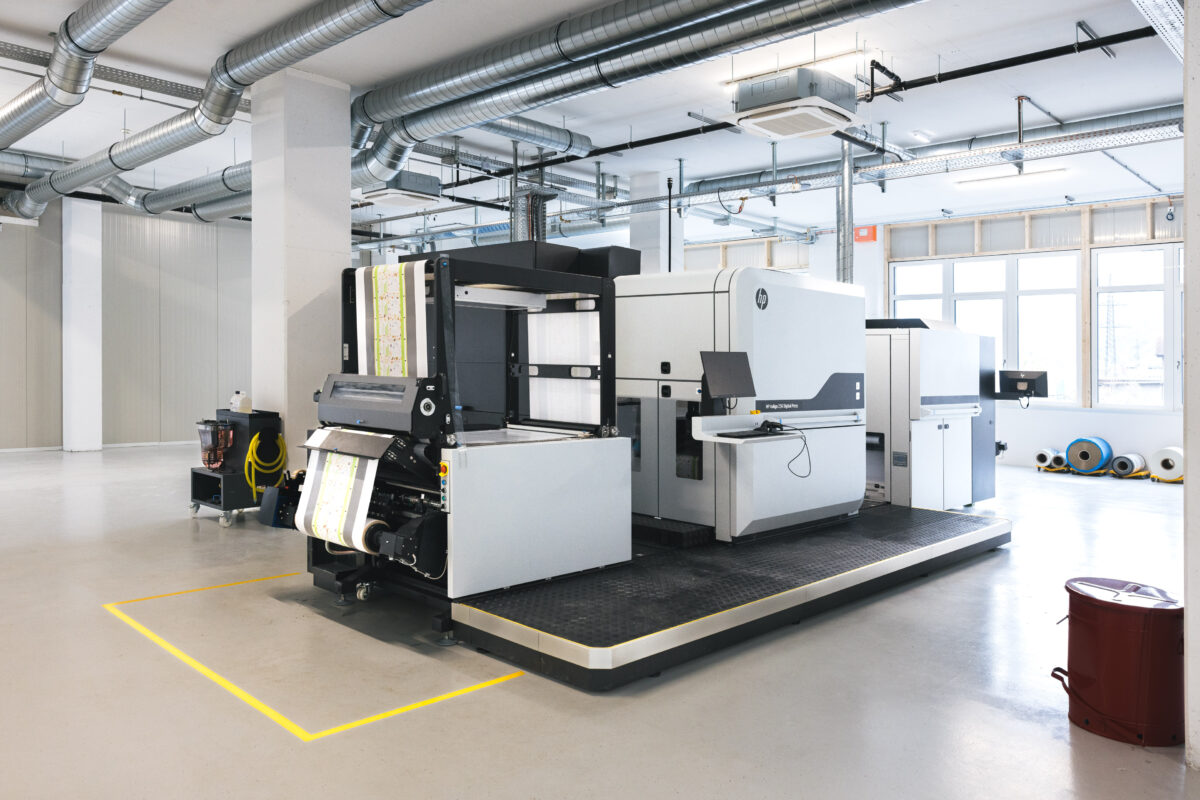
Digital printing is part of the solution, and HP Indigo has been a strategic partner since ePac was founded. Johnny Hobeika says, “HP is part of the solution, but not the entire solution.” The challenges often lie in the downstream process—that is, in the actual bag production. While printing is crucial, it is not the only challenge. The recently installed HP Indigo 200K expands digital printing capabilities in Zams and supports ePac’s continued growth in the region. The investment strengthens the company’s ability to serve customers who require high-quality flexible packaging with short lead times. This also reinforces CHROMOS’s role as a local HP sales partner. Proximity, responsiveness, and an understanding of 24/5 operations are not secondary considerations for ePac, but rather integral to its delivery capabilities.
Recyclability in Continuous Operation
Another area where the process logic becomes apparent is recyclability. ePac can not only offer recyclable materials as a technical option, but also produce them efficiently and consistently as standard. Johnny Hobeika says: “It’s one thing to be able to process recyclable materials. It’s quite another to process recyclable materials on a sustainable basis.” If you process only a small proportion of recyclable materials, you can compensate for efficiency losses in other ways. Anyone who produces a large portion of their portfolio this way must keep materials, processes, and costs under control. ePac has gradually built up expertise in the areas of PE, polyolefin, and PP. These materials are challenging to process. The question isn’t just: Can you print on them? The question is: Can you use them to produce functional packaging at a marketable price and within a lead time of 10 to 15 days?
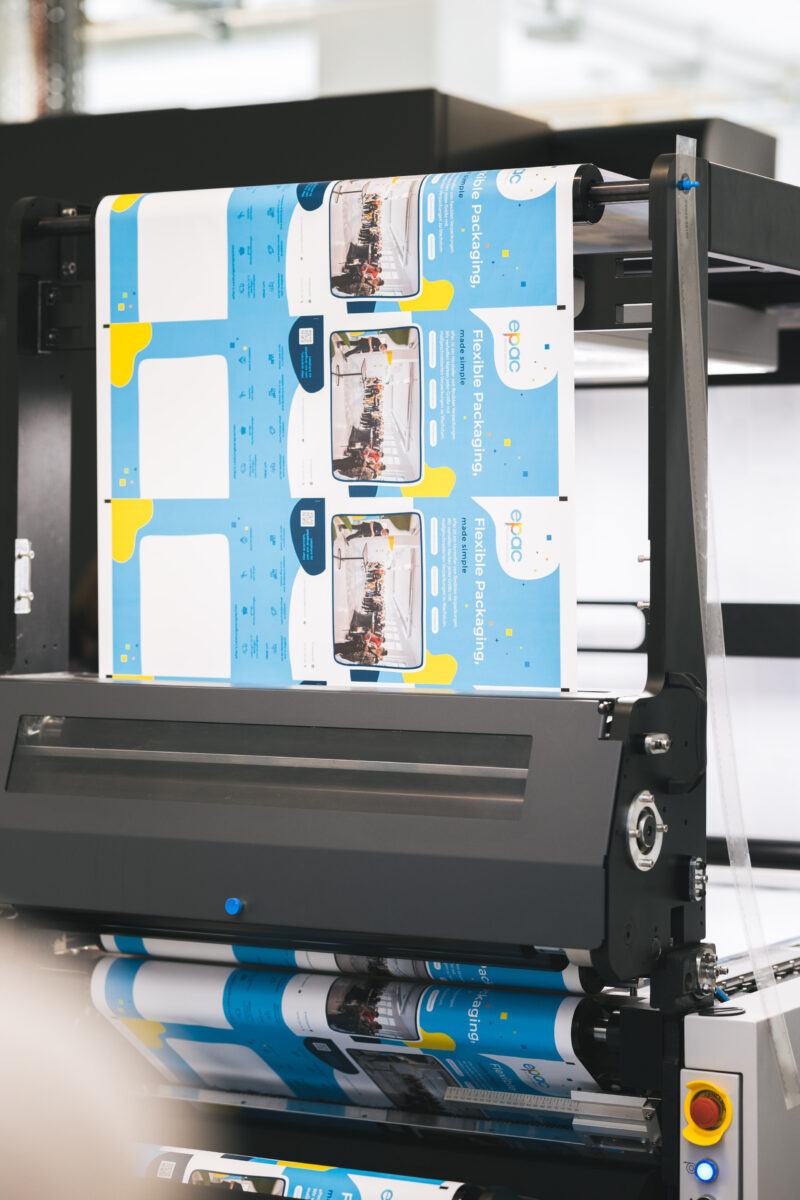
This is precisely where the importance of self-imposed process limits becomes apparent. ePac does not intend to include every material, every format, and every additional requirement in its service catalog without jeopardizing its own delivery commitment.
Employees as the Core of the Overall Model
The model’s reproducibility depends not only on machinery and work processes; it also depends on people. Zams has already demonstrated this during the setup phase. Peat describes the job market in Tyrol as challenging: “It’s a ski region, and recruiting staff was quite difficult.” The shortage of skilled workers affects more than just the packaging industry in Austria. Hobeika describes it as a global problem.
ePac responds to this with internal training and clear career paths. The company also recruits employees from outside the packaging industry and trains them internally. This works because the processes are standardized. New hires do not encounter ad-hoc local solutions, but rather defined processes, clear roles, and repeatable process steps.
In the interview, Hobeika discusses how ePac attracts young talent and offers them opportunities in a digitized, scalable industry. The work is technically demanding. It encompasses printing, lamination, bag manufacturing, materials, data, workflow, quality, and customer service. Those who master these processes develop skills that extend beyond a single plant.
This creates an internal knowledge base that grows with every location. A problem at one plant becomes a learning experience for the entire network. A process improvement in France can help in Austria. An operator with experience on one production line can support another location. This not only strengthens technical performance but also fosters a sense of community within the network. This culture is not separate from the business model—it is part of it. When a delivery time of 10 to 15 days is the top priority, people must be able to learn quickly, communicate clearly, and act as part of the network.
An ideal model for a growing market
Flexible packaging is among the most important packaging formats in the European consumer goods market. In Western Europe, it accounts for about 35% of retail packaging units, making it the largest type of packaging by volume. Between 2018 and 2023, flexible packaging was among the formats with the strongest growth in terms of additional packaging units. However, its significance lies not only in volume but also in material usage. In terms of volume, flexible packaging accounts for at least half of all primary food packaging, yet by weight it requires only about one-sixth of the packaging material. Consumers value it primarily for product protection, ease of use, and light weight. There are no signs that the market will change drastically in the near future.
With its focus on digital flexible packaging, short lead times, and support for small and medium-sized order volumes, ePac has established itself as a key partner for brands seeking agile, high-quality packaging solutions. The company’s continued investments at its Zams facility underscore its long-term commitment to innovation, customer service, and sustainable growth in the European packaging market.
About ePac
ePac Europe is a leading provider of digitally printed flexible packaging. The company offers a wide range of packaging solutions for a variety of applications, including food, beverages, cosmetics, chemicals, pet food, and dietary supplements.
The focus is on small and medium-sized brands that need professional packaging solutions without high minimum order quantities, printing plate costs, or long lead times. Fast turnaround times—about 10 business days for roll stock and 15 business days for finished bags—are at the heart of ePac’s service promise.
ePac currently serves all of Europe from five production sites located in the United Kingdom, France, Poland, and Austria.

Contact us
Want to find out more? Our experts will be happy to help you.
Contact us: